
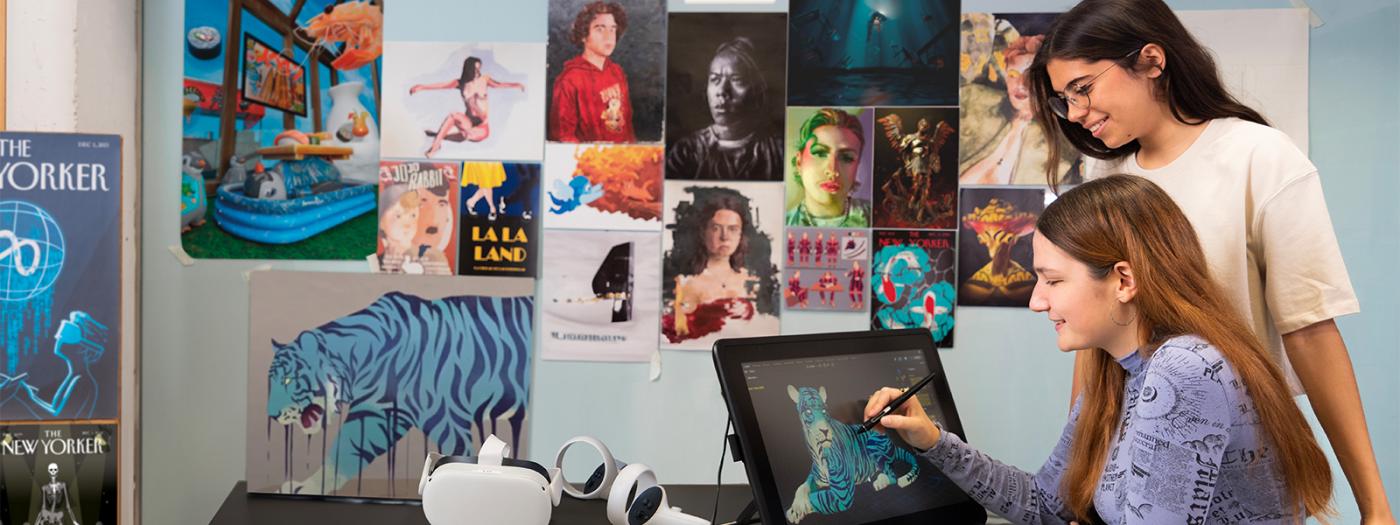
The course explores the world of graphic design through the observation and analysis of key figures in the sector, with a particular focus on the correct use of typography and composition. The aim is for students to develop their own judgement, understand the communicative intent behind their decisions, and be able to produce graphic work based on a clear and well-founded concept. During the course, two branding projects will be carried out: one focused on advertising and informational communication, and the other linked to a social project. Students will also work on layout and the preparation of documents for printing, using primarily Adobe Illustrator and Adobe InDesign to develop more professional design processes applicable to the sector.
Titular Professors
Understand the foundations of graphic design through the analysis of references and the study of typography and composition.
Develop visual judgement and communicative intention, making design decisions that are coherent, well?reasoned and aligned with the intended message.
Create graphic pieces with a clear concept, applying professional design processes and digital tools such as Adobe Illustrator and InDesign.
Apply branding knowledge by developing projects oriented toward advertising communication and social?focused design.
Master technical aspects of the graphic design process, including layout design and preparing documents for print.
1. What graphic design is and the role of the graphic designer. Fields and sectors of work.
2. Key historical and contemporary graphic design figures.
3. The creative process in design: the importance of strong ideas and emotional connection with the viewer.
4. Typography: type families, micro- and macro typography, typographic composition.
5. Layout design and document preparation for print.
6. Brand identity design: how to create a logo and a design manual.
7. What social design is.
8. Printing techniques.
The course will be developed through multiple teaching methodologies. There will be a more lecture based part in which the instructor introduces specific concepts, combined with debate sessions and visual reference analysis. To progressively assimilate these concepts, students will work on design projects where they will apply the knowledge presented throughout the semester.
Classes will be structured into four blocks: theoretical and debate sessions; work sessions focused on developing ideas; experimentation sessions dedicated to composition using digital tools; and sessions where students share their work in the form of oral presentations. At the beginning of the course, a long term project will be introduced that must be developed in parallel with the other assignments and submitted at the end of the semester.
MD1: Lecture sessions supported by audiovisual materials.
MD2: Practical exercise sessions.
MD3: Project based learning.
MD4: Seminar.
MD7: Flipped classroom
The course includes two assessment components:
- Participation in class and visual diary
- Projects (Editorial–advertising design and Social design)
Projects will be evaluated based on: concept, composition, correct use of typography, originality, coherence, adequacy, final result, and the quality of the visual presentation.
Assignments or projects lacking proper written expression, grammar, spelling, structure, or a bibliography—along with a coherent visual design—will receive a maximum grade of 4.
Failure to meet the conditions to pass the course will result in a maximum grade of 4.
Students have the right to review their project grades on the date set by the instructor; grades may be raised or lowered.
All resubmitted assignments have a maximum grade of 5.
Grades from passed projects in the ordinary assessment are preserved.
- Arnheim, R. (2006). Art and Visual Perception: A Psychology of the Creative Eye. Alianza.
- Dondis, D. A. (2007). A Primer of Visual Literacy. Gustavo Gili.
- Heller, E. (2004). Psychology of Color: How Colors Affect Feelings and Reason. Gustavo Gili.
- Hofmann, A. (1996). Graphic Design Manual. Gustavo Gili.
- Jardí, E., & Monzó, E. (2021). Fifty some Tips on Typography. Gustavo Gili.
- Joly, M. (2009). Introduction to Image Analysis. La Marca Editora.
- Korn Bruzzone, J. (2012). Graphic Design Language. Mar Dulce.
- Kunz, W., & Dávila, M. (2003). Typography. Gustavo Gili.
- Lauer, D. A., & Pentak, S. (2012). Design Basics (8th ed.). Cengage Learning.
- Munari, B. (2016). Design and Visual Communication. Gustavo Gili.
- Samara, T., & Dávila, M. (2004). Designing with and without a Grid. Gustavo Gili.
P. Llasera, J. (2020, october 21). Hey Jaime [Video] Youtube . https://www.youtube.com/@HeyJaime