
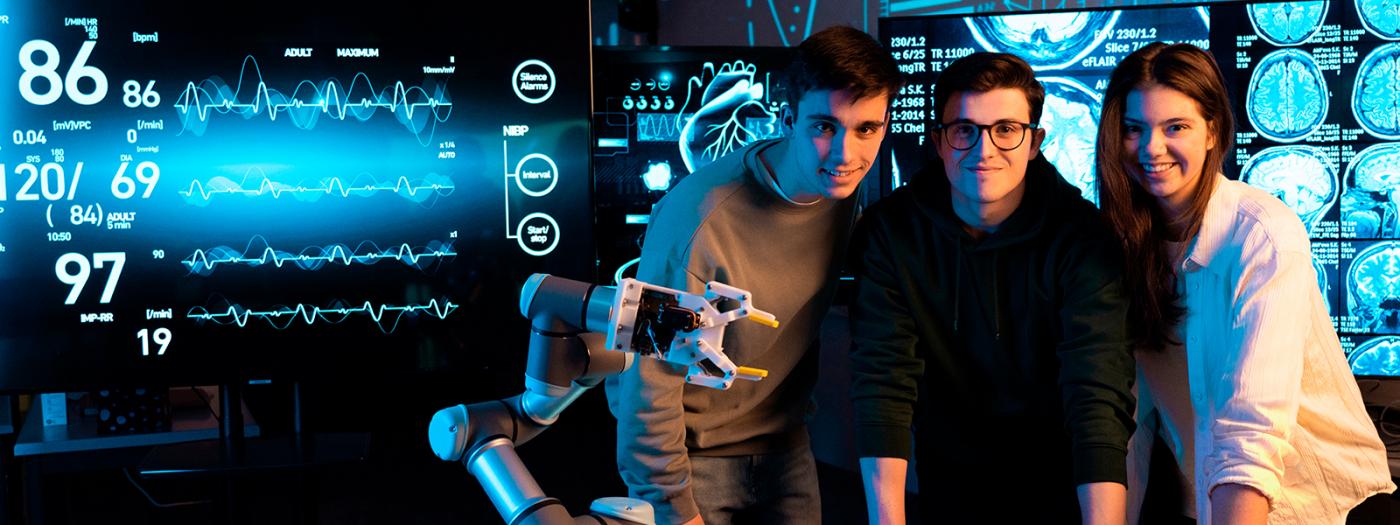
The Chemistry and Biochemistry subject delves into the chemical bases, the structure and properties of biomolecules (proteins, carbohydrates, lipids and nucleic acids) and the chemical bases of cellular functions, with the aim of understanding at a molecular level the organization and functioning of human beings. The subject offers students an overview of the main aspects of chemistry and biochemistry that are considered basic in fields of health sciences and especially in regard to human biology.
Titular Professors
Do not required.
The objectives are:
1- To introduce the chemical and biochemical foundations necessary to understand the structure, properties and function of the main biomolecules
2- To facilitate the understanding of the main metabolic and cellular processes and their relevance in health and disease.
3- To develop the ability to apply theoretical knowledge to the resolution of problems and situations related to human biochemistry.
1. Atomic structure and chemical bonds
2. Properties of elements
3. Acids and bases
4. Carbohydrates and carbohydrate metabolism
5. Proteins, enzymes, and protein metabolism
6. Lipids
7. Nucleic acids
8. Basic cellular structures
The Chemistry and Biochemistry subject will combine theoretical sessions with continuous assessment, made up of different knowledge-integrating activities. The knowledge-integrating activities include different modalities, such as the guided resolution of exercises or cases, seminars in a small group format, directed work and cooperative learning. Activities will be proposed for the student to carry out at home and deliver to the teacher and others will be carried out in class, with the aim that the student actively participates in their resolution. Additionally, the student will carry out laboratory practices in which the concepts obtained in the theoretical sessions and the integrating activities will be reviewed, always with the direct supervision of a teacher. A total of 4 sessions will be held throughout the semester (2 Chemistry sessions and 2 Biochemistry sessions) in the afternoon.
Students will be assessed through a continuous and global evaluation of knowledge and competencies in Chemistry and Biochemistry, including periodic quizzes, laboratory practicals, and a final integrative exam, taking into account both progress throughout the course and the final consolidation of learning outcomes. In the resit exam, previously passed components will be retained, and assessment will focus on the recovery of non-passed components.
The correct use of chemical and biochemical terminology will be assessed, along with the understanding of the structural and functional characteristics of biomolecules, the ability to apply theoretical and practical knowledge to solve questions related to human biochemistry, and the clarity and rigour in the presentation of reasoning and results.
Alberts B, Johnson A, Lewis J, Morgan D, Raff M, Roberts K, et al. Biología molecular de la célula. 6a ed. Barcelona: Omega; 2016.
Chang, Raymond. Química. 11ª Ed. McGraw-Hill; 2013.
Nelson, D.L.; Cox, M. Principios de bioquímica [de] Lehninger: sexta edición. Barcelona: Omega; 2015
Voet, D. y Voet, J.G. Biochemistry. 4th Ed. NJ: John Wiley & Sons; 2011.