
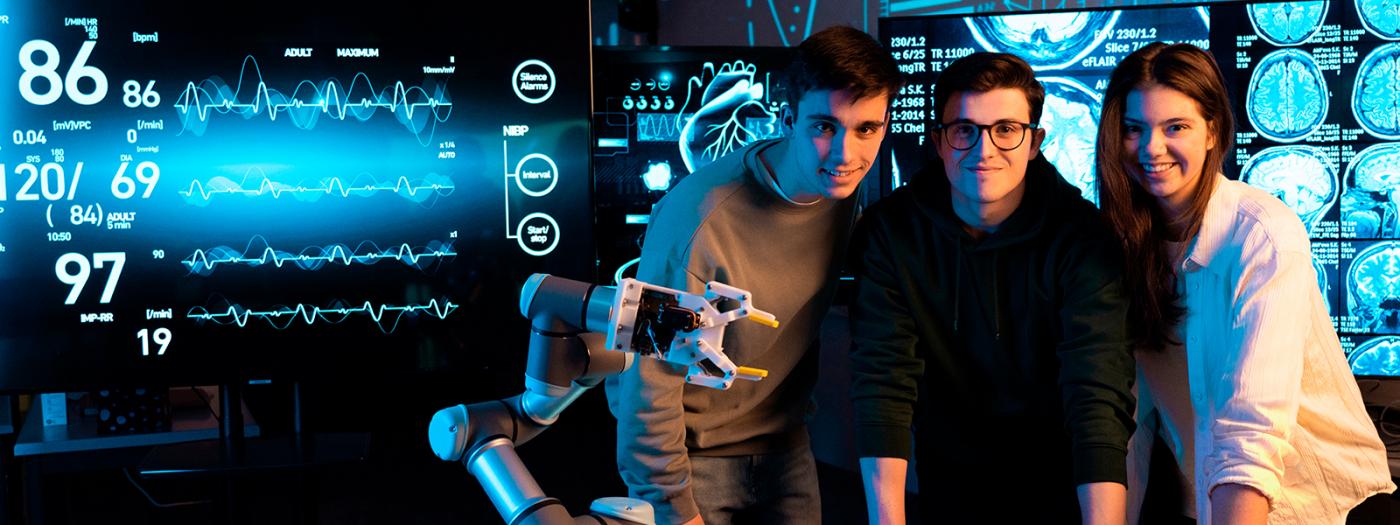
Human physiology studies the functions of the human body and the mechanisms that regulate them. In this subject, students will learn to recognise and apply the basic concepts governing integrated body function (as a whole organism), organised by body organ systems. The subject will also allow students not only to identify and relate the different mechanisms that regulate human homeostasis, but also how the body adapts to its environment.
Titular Professors
Basic anatomy
The objectives of the following subject are:
1. To provide students with an integrated view of human body function through the coordinated study of the different organ systems.
2. To promote understanding of the physiological mechanisms responsible for homeostasis and for the adaptation of the human body to its environment.
3. To develop students’ ability to apply basic principles of human physiology to the analysis and resolution of problems related to the field of health engineering.
1. Introduction to human physiology
2. Integumentary system
3. Blood physiology and immune system
4. Cardiovascular system
5. Respiratory system
6. Digestive system
7. Urinary system
8. Skeletal system
9. Nervous and muscular system
10. Endocrine system
11. Reproductive system and notions of development
The following learning activities will be used to achieve the subject's objectives:
1. Lectures presenting the main theoretical concepts, with student participation through questions and related quizzes.
2. Seminars linked to each topic. These will include reading scientific documents, internet-based information searches, or participatory dynamics such as peer learning.
3. Exercises (including a practical part) or small directed projects. Students (individually or in groups) will deliver a task upon completion.
Students will be assessed through a continuous and global evaluation of their progress, including self-assessment and peer-learning quizzes, individual and group assignments linked to seminars and practical sessions, as well as class participation and engagement, complemented by written exams to assess the consolidation of acquired knowledge.
Assessment will consider the understanding of physiological mechanisms, the ability to integrate and apply knowledge, scientific rigor, data interpretation, and clarity in communicating results.
Tortora, G. J., & Derrickson, B. (2018). Principios de anatomía y fisiología (15a ed.). Editorial Médica Panamericana.
Betts, J. G., Desaix, P., Johnson, E., Johnson, J. E., Korol, O., Kruse, D., et al. (2017). Anatomy and physiology. OpenStax, Rice University.
Hall, J. E., & Guyton, A. C. (2016). Tratado de fisiología médica: Guyton & Hall (13a ed.). Elsevier.
N/A