| Modality | On-site |
|---|---|
| Duration | 9 Months |
| Language | English |
| Places available | 50 |
| Credits | 60-ECTS |
| Start Date | 01 March 2027 |
| Schedule | Monday to Thursday from 5:30pm to 8:30pm |
| Location | Barcelona |
What if technology stopped being a tool and became an artistic language?
Explore the intersection of art, science and technology to create immersive, critical and experimental digital experiences. It is not just about mastering new technologies, but using them to question how we perceive, create and relate to the world.
At La Salle-URL's University Master's Degree in Digital Arts and Creative Technologies, you will work with AI, VR/AR, creative coding, sound, interaction, data and virtual production. You will also have the opportunity to connect with leading artists, researchers, curators and studios from the international digital scene.
The University Master's Degree in Digital Arts and Creative Technologies trains you to research, conceptualise, produce and present digital art projects in a context where creation no longer happens within a single discipline. The programme combines practices such as advanced visual design, immersive art, sound, sensors, interaction, creative coding, virtual environments, game engines, AI applied to art and new forms of human-machine collaboration, with a critical perspective on the cultural, social and ethical impact of technology.
You will study in Barcelona, at the Interactive Arts & Science Laboratory —IASlab—, an immersive space designed for developing multimedia content, art and digital entertainment. Throughout the master's degree, you will develop individual and group projects, attend talks, visit companies and industry events, and work with leading names such as Domestic Data Streamers, Eurecat Multimedia Technologies Unit, Desilence, The Glad Scientist, Shook Studio, Alba G. Corral, Anna Carreras, Xavi Bové Studio, Xavier Maixenchs, Antònia Folguera and Pep Salazar. In other words, the kind of faculty that does not just explain the future: it is prototyping it.
Why study at La Salle-URL?
Because the world needs professionals who can understand technology, question it and use it to make a real impact.
A laboratory for creating immersive experiences
The IASlab will allow you to develop projects in an environment designed to explore interaction, visualisation, sound, virtual environments and new forms of digital production.
Learning through real-world challenges
You will work on real projects and situations that bring you closer to the professional world from day one.
A transdisciplinary ecosystem
You will collaborate with people from engineering, technology, architecture and business to learn how to solve complex challenges from different perspectives.
An artistic, technological and critical approach
The programme combines digital creation, artistic research and technological experimentation. You will learn to work with advanced tools without losing sight of their cultural, social and ethical impact.
Frequently Asked Questions about the Master's Degree in Digital Arts and Creative Technologies (FAQS)
Why study a Master's Degree in Digital Arts and Creative Technologies?
Because digital creation is no longer limited to designing visual pieces: today it means experimenting with image, light, sound, interaction, data, artificial intelligence, sensors and virtual environments. This master's degree allows you to explore the relationship between art, science and technology to create immersive, critical digital experiences connected to the new languages of the creative industries.
What sets this master's degree apart from other Digital Art master's degrees?
The programme covers the entire digital artistic process: from conceptualisation and production to curating and exhibition at festivals and galleries. It also takes place in the Interactive Arts & Science Laboratory —IASlab— and offers mentoring from leading artists, researchers, creative studios, producers and curators.
Who is this master's degree for?
It is aimed at graduates and professionals from artistic, creative, design, audiovisual, multimedia, architecture, technology or related fields who want to explore digital creation at the intersection of art, science and technology. It is also suitable for hybrid profiles with prior experience in programming, sound, interaction, visual design, cultural management or other creative practices.
What will you learn during the master's degree?
You will learn to create immersive artistic experiences by combining tools such as creative coding, advanced visual design, sound, sensors, interaction, artificial intelligence, VR/AR, virtual production, game engines and data analysis. You will also work with artistic research methodologies, critical thinking and the development of conceptual projects with an ethical and experimental dimension.
What technologies are covered in the master's degree?
The programme works with technologies applied to artistic creation, such as artificial intelligence, machine learning, virtual and augmented reality, sensors, interaction, creative coding, virtual production, game engines, 3D sound, live visuals and immersive environments. The point is not to treat them as isolated tools, but as languages for creating new experiences.
What career opportunities are there in digital art and creative technologies?
The master's degree prepares you for roles such as digital artist, new media artist, immersive experience designer and producer, VR/AR virtual environment creator, digital arts project producer, curator specialising in art, science and technology, specialised cultural manager, or creative industries professional working with interactive experiences, experimental sound, artistic video games and digital installations.
Does the master's degree include artificial intelligence applied to art?
Yes. The programme incorporates artificial intelligence applied to music production, sound design, visual production and artistic creation. It also explores computational creativity, human-machine collaboration and the use of advanced machine learning tools in audiovisual experiences, installations, VR/AR and video games.
Does the programme cover creative coding and generative art?
Yes. The master's degree includes creative coding and generative art, with contributors such as Alba G. Corral and Anna Carreras, whose work is connected to visual creation, creative code and generative art. This line of work enables new forms of digital art to emerge through programming, data, interaction and visual experimentation.
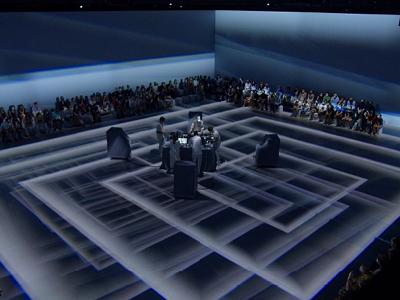 Desilence
 Albert Data
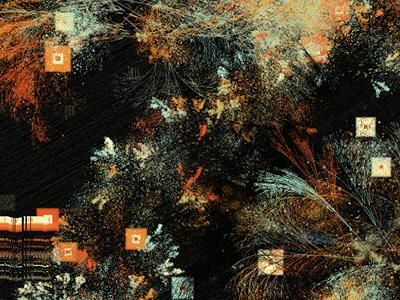 Anna Carreras
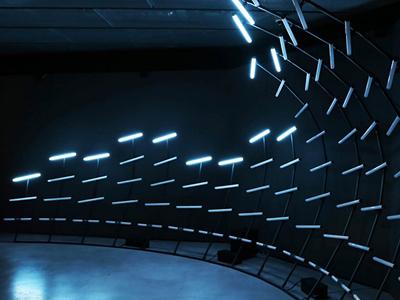 Domestic Data Streamers
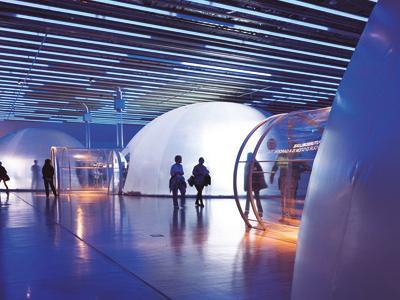 Pep Salazar & Elisenda Muns
 The Glad Scientist
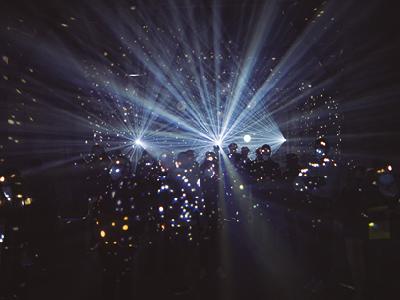 Xavi Bové Studio
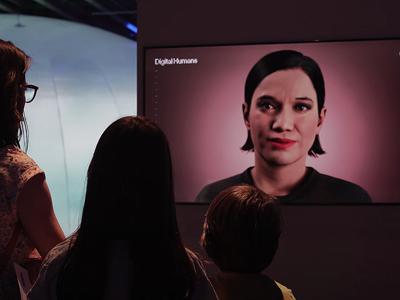 Xavier Maixenchs
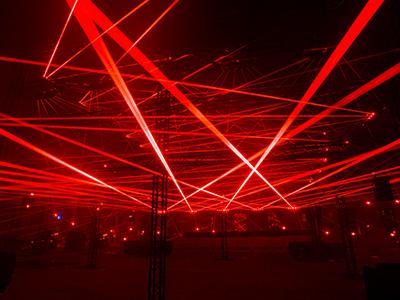 OnionLab
What made me choose this programme was, above all, the quality of the faculty and the human environment around it. The mentors gave me the tools I needed to turn abstract ideas into real projects and develop skills I would never have imagined before. It is a multidisciplinary, non-judgemental and highly enriching space where you can experiment, grow and feel supported by both faculty and classmates.
I wanted to explore the relationship between technology and people, and how each influences the other from both a technical and human perspective. I chose the University Master's Degree in Digital Arts and Creative Technologies because of its faculty, which was the key differentiator compared with other similar programmes.
Collaborators