
David Badia Folguera
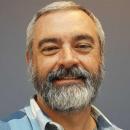
David Badia is a Telecommunications Technical Engineer from EUETT La Salle (affiliated with UPC), an Electronic Engineer, and holds a PhD in Engineering from La Salle – Ramon Llull University. He obtained his degrees in 1990, 1995, and 2012. He has been a lecturer since 1987, initially in the Department of Communications and Signal Theory and currently in the Department of Engineering, Animation and Digital Arts, where he serves as Head. He is a researcher in the Smart Society group, in the Communications line. Previously, he was a member of the GRECO and GR-SETAD groups between 2005 and 2021. His research focuses on electromagnetic compatibility, electronic instrumentation, and radiocommunications. He has participated in six research projects on HF communications in Antarctica, with three stays at the Juan Carlos I base.
CV – David Badia Folguera
Head of the Department of Engineering, Animation and Digital Arts
La Salle Campus Barcelona – Ramon Llull University
Academic Background
- PhD in Electronics, La Salle Campus Barcelona – Ramon Llull University (Spain), 2012
- Electronic Engineer, La Salle Campus Barcelona – Ramon Llull University (Spain), 1995
- Telecommunications Technical Engineer, EUETT (affiliated with UPC), (Spain), 1990
Teaching Activity
Full-time lecturer at La Salle Engineering – UPC affiliated center since 1987, teaching in the field of electronic instrumentation and measurement. Since 1992 at La Salle Campus Barcelona – URL, in the same area and adding electromagnetic compatibility.
Research and Technology Transfer Activity
He has held responsibilities at the Radioelectrical Certification Laboratory and LabCOM, both accredited by official bodies, carrying out work in communications, signal processing, and electromagnetic compatibility. He participated in the commissioning of the EMC laboratory and in support and technology transfer services to companies.
Since 1997, he has taken on management roles: head of the Department of Communications and Signal Theory and coordinator of engineering degrees, participating in teaching innovation projects.
He has been a member of the GRECO and GR-SETAD groups, later of the GRITS group, and is currently a researcher in the Smart Society group, in the Communications line.
His most prominent research area is ionospheric communications, with participation in three campaigns at the Antarctic base Juan Carlos I.
Projects
ABSTRACT: Up to now most of the sensors installed by the Spanish scientific community in Antarctica have been placed clo...
Up to now most of the sensors installed by the Spanish scientific community in Antarctica have been placed close to the stations, because...
After a first proof of concept in Livingston Island, the project aims to expand the use of communications in HF (3-30 MHz) by ionospheric...
Cada any el nombre de dispositius d'Internet of Things (IoT) connectats creix de manera exponencial. Les xarxes que fan possible aquesta...