

Artificial intelligence has become a reality in most sectors such as health, security, entertainment, transport, and education, among others. The increasing relevance of AI in people’s lives raises the challenge to determine its potential impacts and benefits on society.
Those changes make it necessary to start regulating to ensure that AI exists for the benefit of individuals and society. In front of this huge mission, we must ask ourselves: how can AI improve our lives? Who do the ethical boundaries of AI depend on? Is it possible to create AI equipped with universal principles so that it acts based on values, prudence, responsibility and equity?
On the 20th of June, we will be discussing all these challenges with two experts: Elisabet Golobardes and Xavier Vilasís. Join this webinar to understand how all these issues impact people’s lives through examples of real projects in the fields of health, cybersecurity and the digital environment.
Don’t miss it!
AGENDA
19:00h – Benefits of AI on people’s lives: real cases
19:30h – Who do the ethical boundaries in the field of AI depend on? The role of programmers, companies, lobbies, media and citizens
19:50h – Questions from the audience
PONENTES:

Expert in the field of Artificial Intelligence and Data Science for more than 25 years. Degree in Computer Science by the Polytechnic University of Catalonia, PhD in Computer Engineering from the Ramon Llull University. PDG by the IESE Business School. She is currently the academic coordinator of the Master’s Degree in Data Science. Member of the Data Science Research Group for the Digital Society (DS4DS). Member of the LHCb collaboration at CERN. Member of the Advisory Council of the Observatory of Ethics in Artificial Intelligence of Catalonia (OEIAC). Member of the Board of the educational foundation Flos i Calcat. Promotion of Women in Technology.
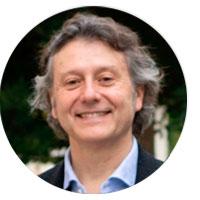
Expert in Data Science, Machine Learning and Artificial Intelligence. Vice-Dean of the Doctoral School and Coordinator of the Doctoral Program of La Salle-URL. He is a Principal Investigator of the Data Science Research Group for the Digital Society (DS4DS), a member of the LHCb collaboration at CERN and a member of the IEEE Cellular Neural Networks and Array Computing Technical Committee. Graduated in Physics from the University of Barcelona (1989) and PhD in Physics from the University of Barcelona (1993). He is also PDG by IESE (2016).